
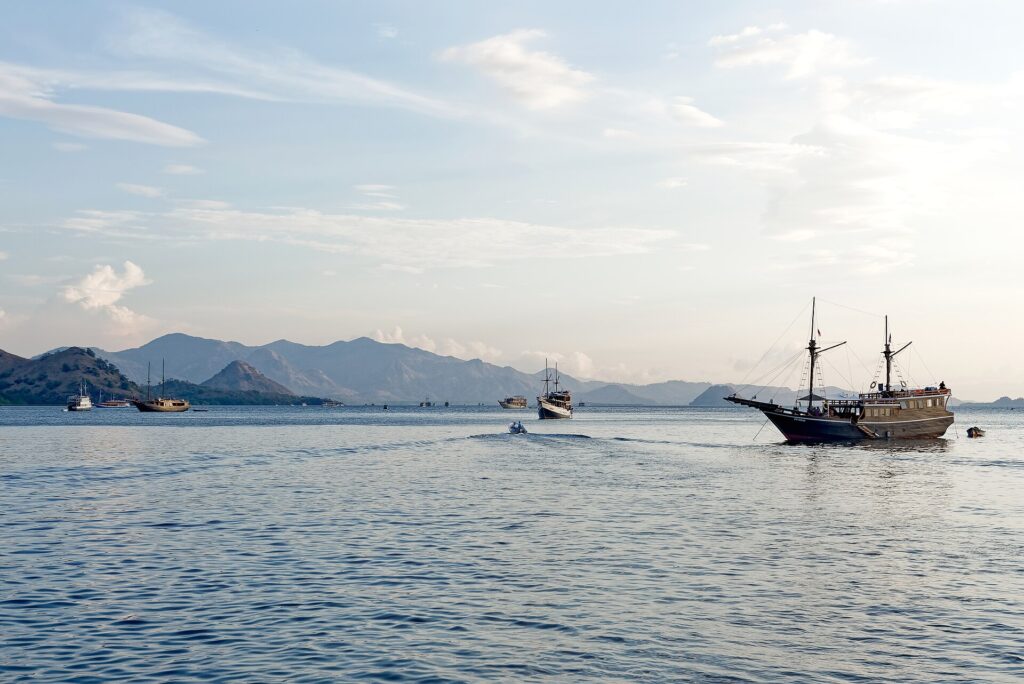
About This Place
Komodo Island is the largest island in the national park and the one that named it. The ranger station is at Loh Liang, and the dragon population here is the largest of the wild subpopulations — commonly given as around 1,700, a figure that does trace back to a real source: a mark-recapture study by Purwandana and colleagues published in Biological Conservation in 2014, which put the park total at roughly 3,000 to 3,400 and Komodo ahead of Rinca. What it counts is every age class, hatchlings included, which is not the same thing as adults.
It is also the island most people skip. At roughly two and a half hours from Labuan Bajo by speedboat and up to four by wooden phinisi, against about an hour to Rinca, it costs a full day rather than a half. Most day trips take Rinca instead, and most liveaboard itineraries reach Komodo only on longer routes.
What the extra hours buy is a bigger island, a longer trek, and Pantai Merah on the eastern coast — which is why the two most-photographed stops in the park often sit on the same day.
At a Glance
- Also known asPulau Komodo, Loh Liang, Komodo Island Indonesia
- TypeIsland, Wildlife Site, Village
- Inside Komodo National ParkYes
- How to get thereLiveaboard, Speedboat Day Trip
- Travel time from Labuan BajoAbout 2.5 hours by speedboat; up to 4 hours by wooden phinisi
- LandingJetty
- Last checked2026-08-25
What to Expect
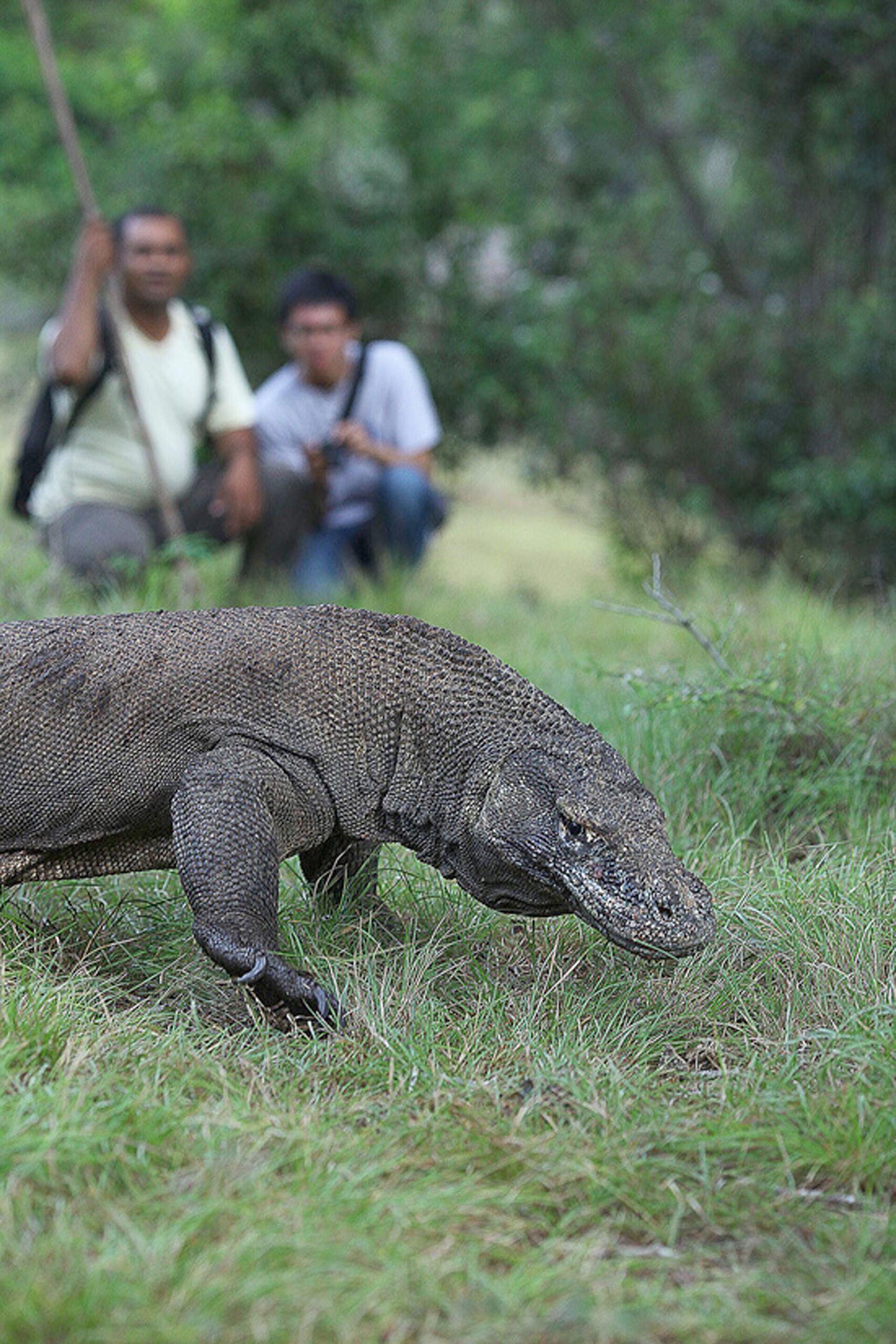
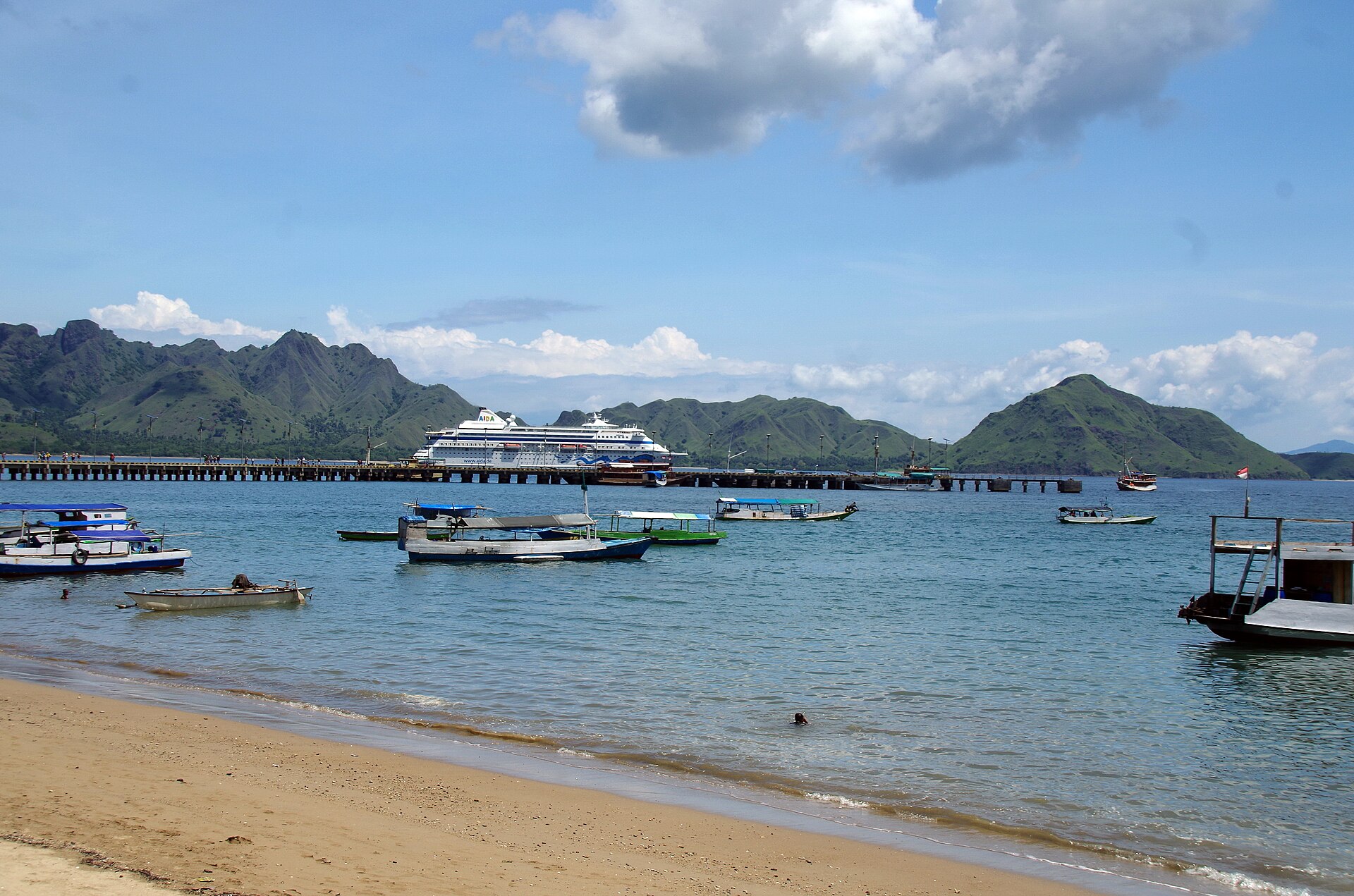
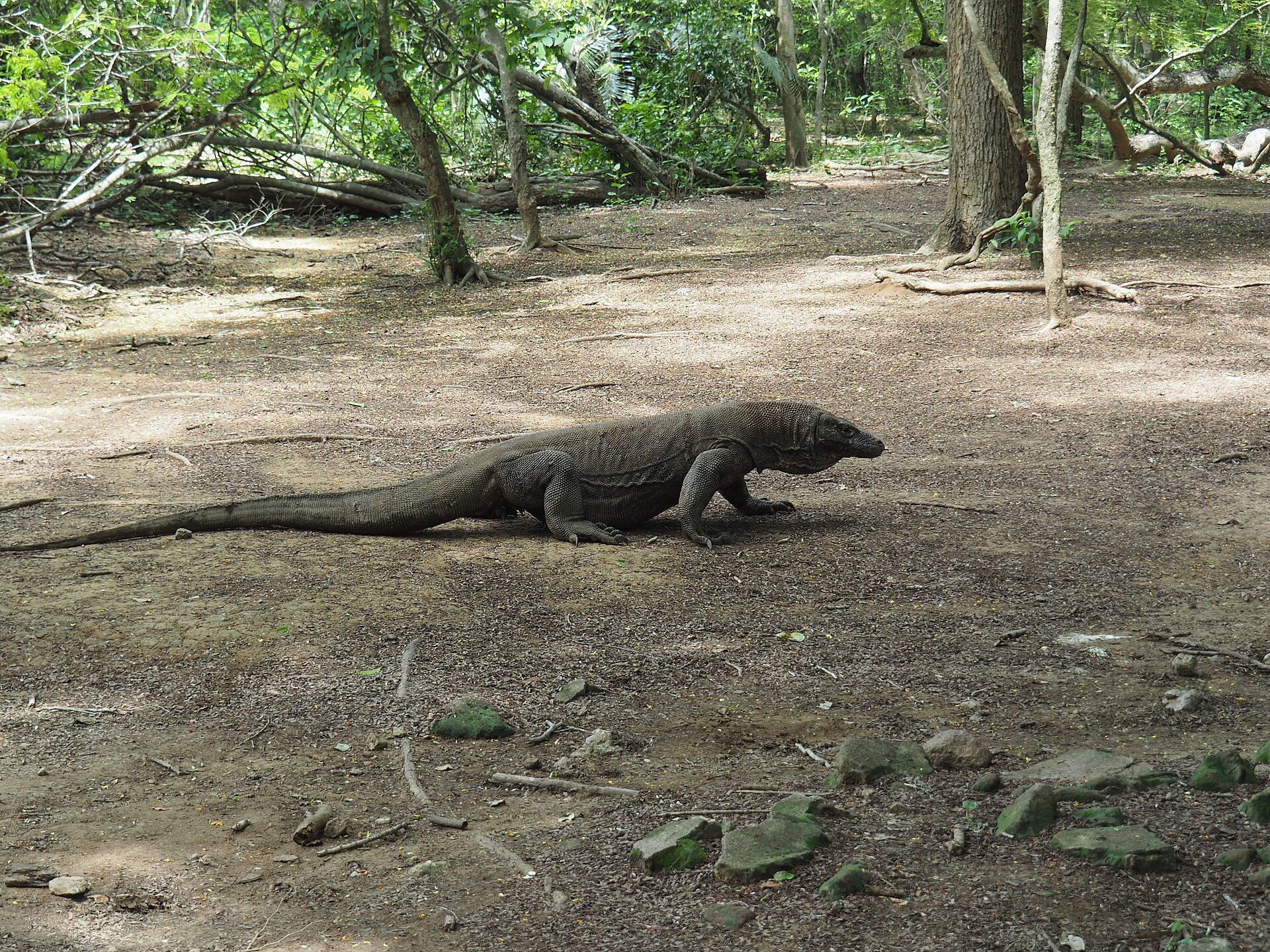
You land at the Loh Liang jetty, take a briefing at the ranger station, and walk with a ranger carrying a forked stick. Trek options run roughly one to two hours depending on the route, longer than the equivalent on Rinca and across more varied ground — dry monsoon forest giving way to open savannah rather than savannah throughout.
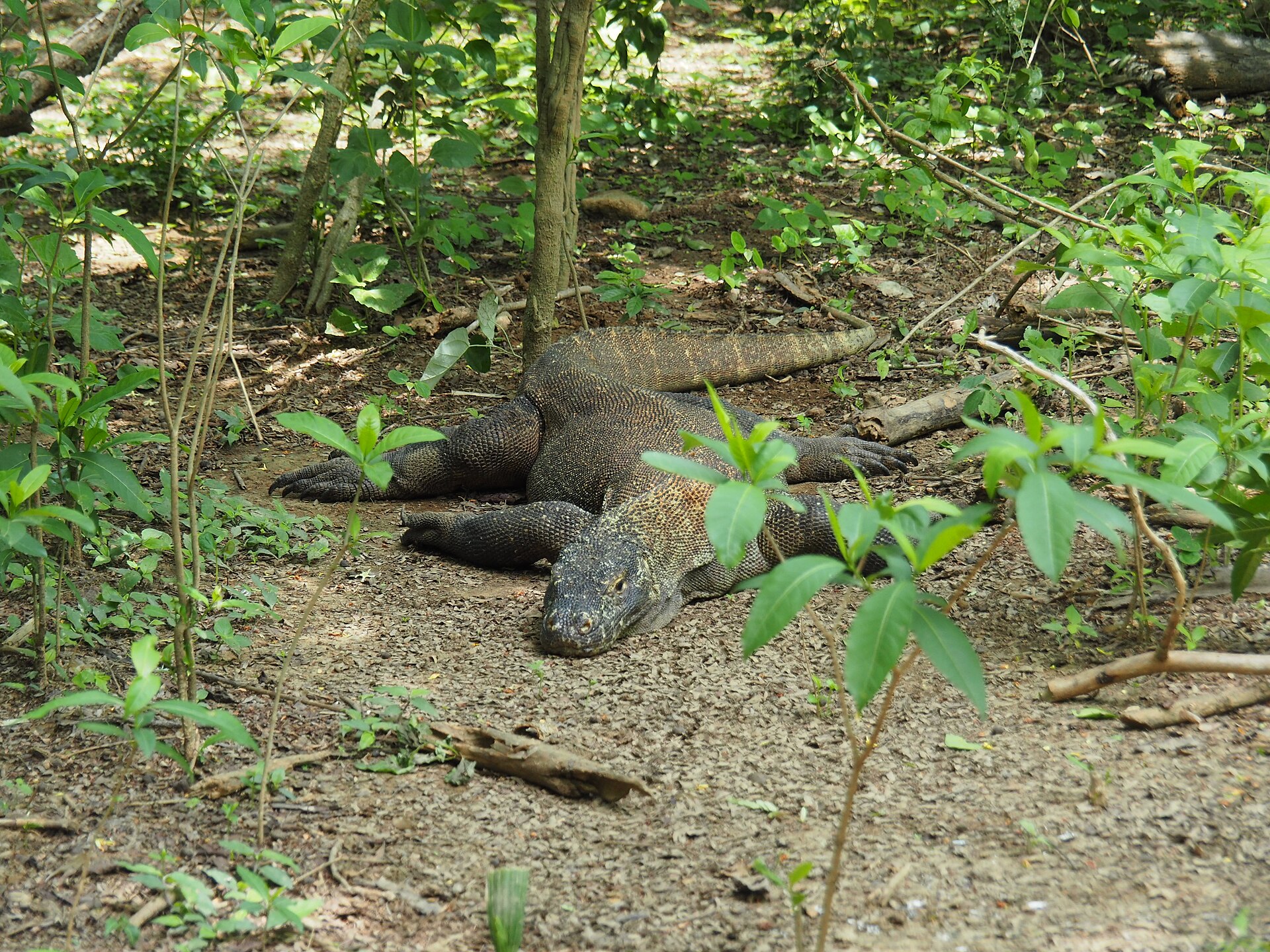
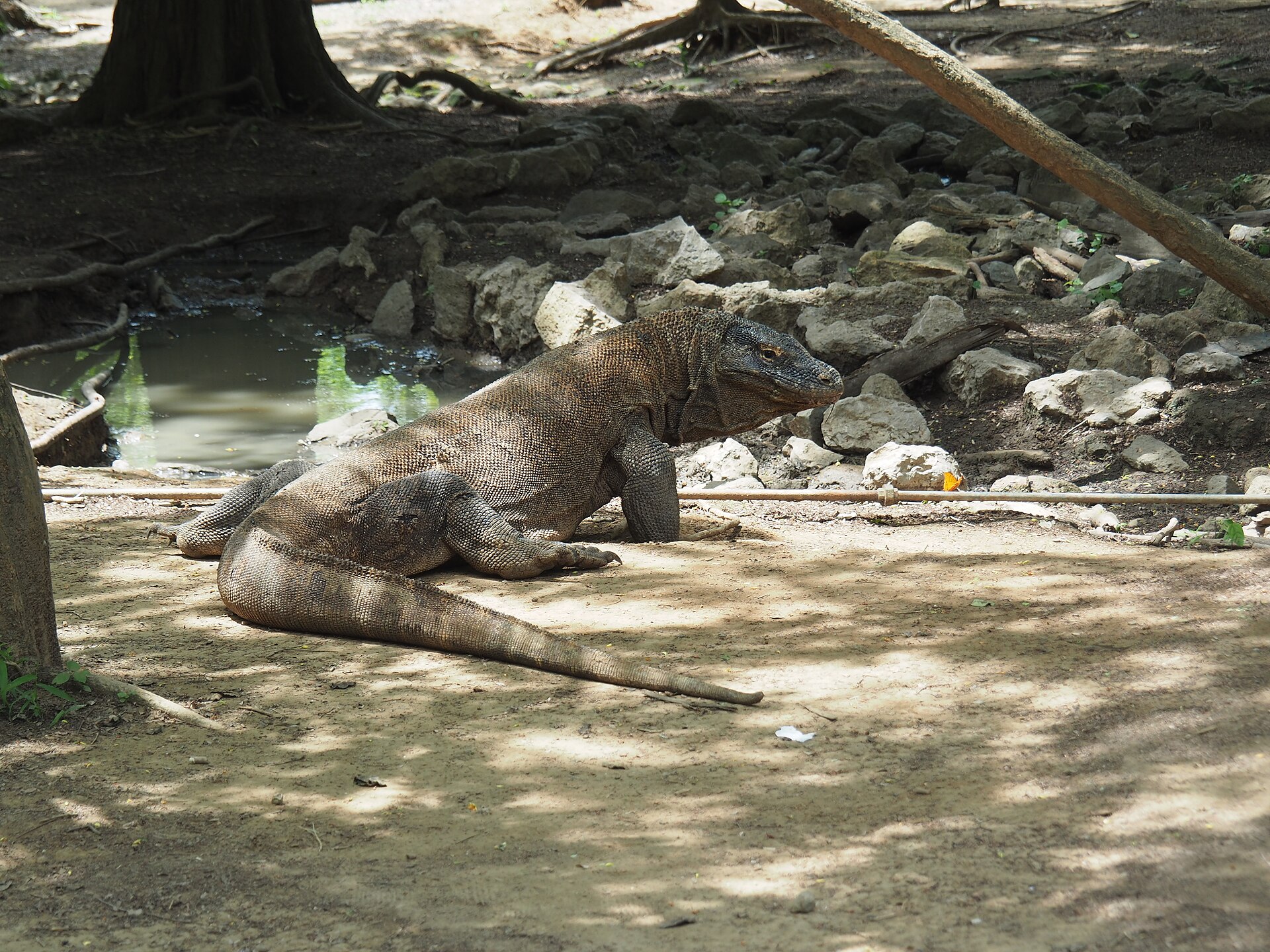
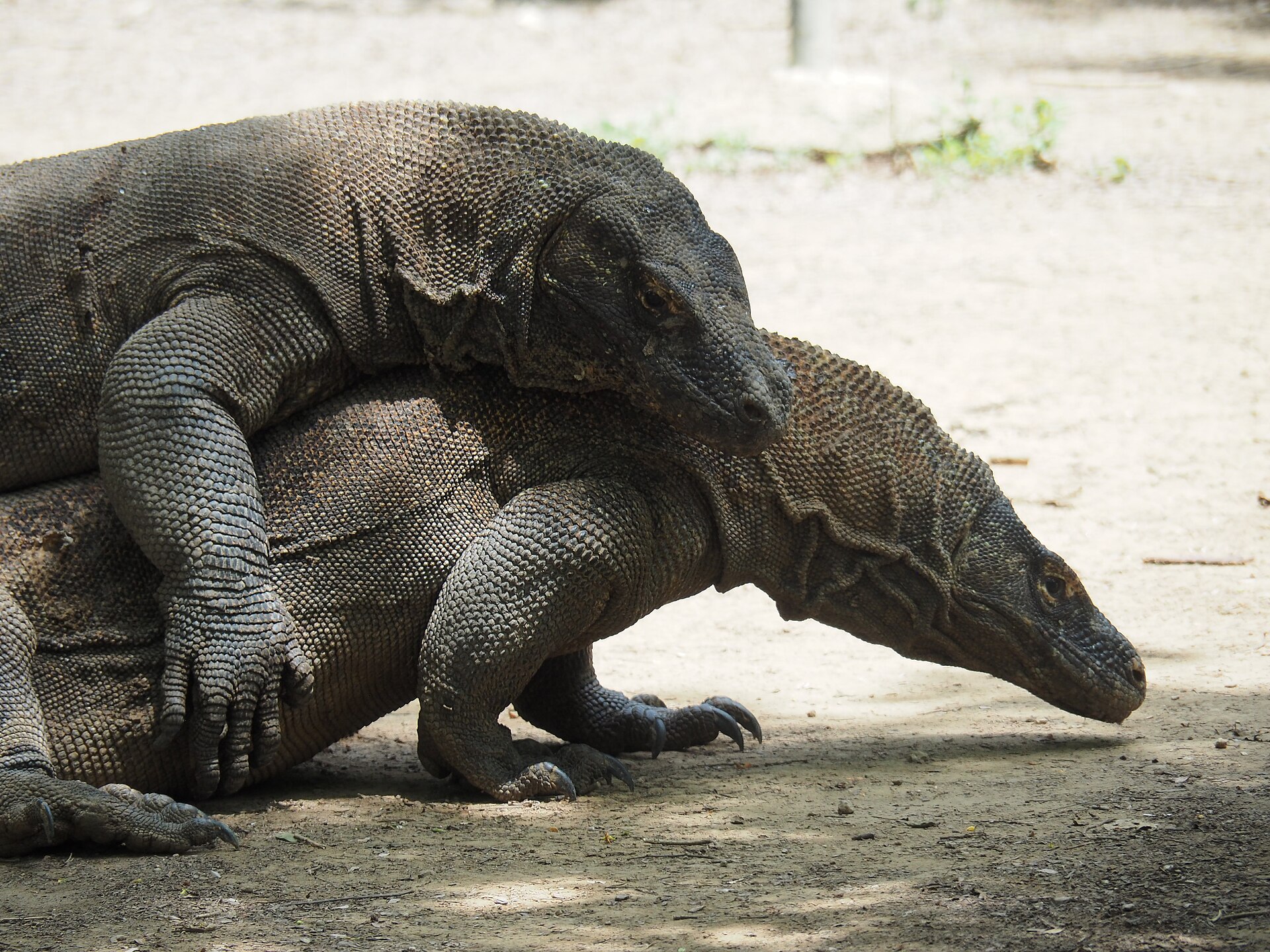
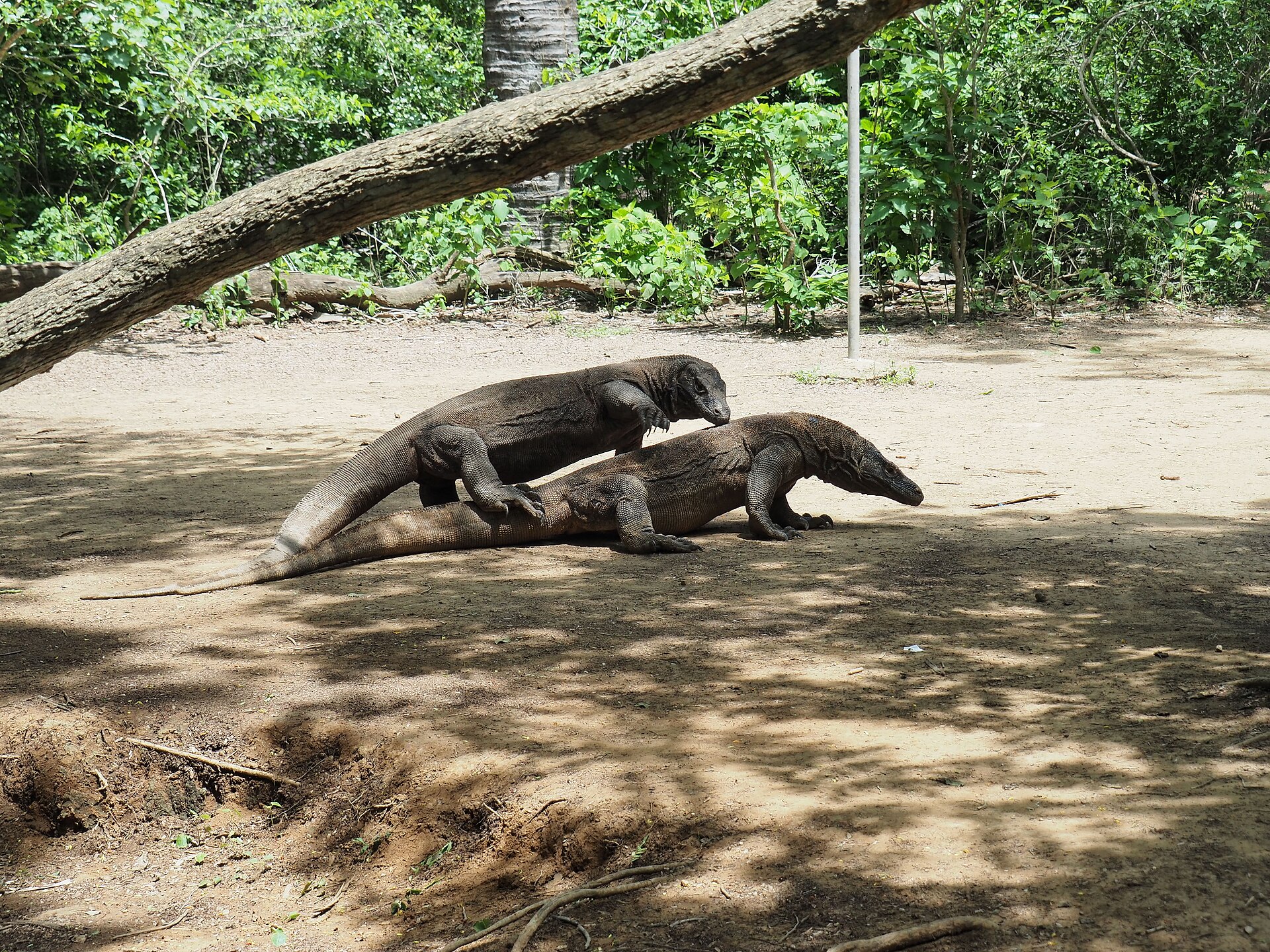
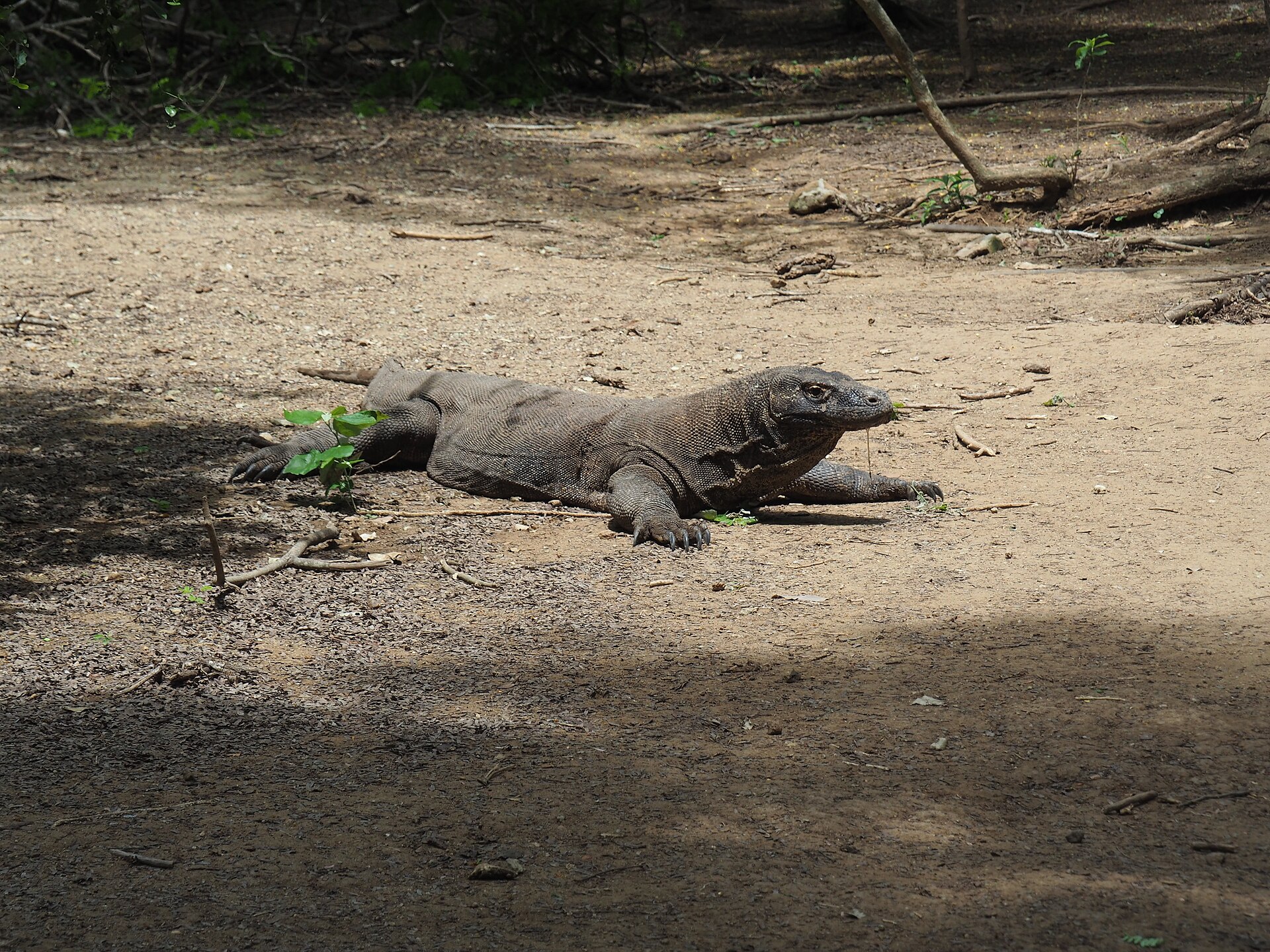
Dragons near the station are habituated and sightings there are reliable. Away from it, this is a large island and the animals are genuinely distributed, which is what makes the longer route worth the extra hour if you have already committed a whole day to getting here.
The island is inhabited, which surprises people. Komodo village sits on the east coast with a population recorded around 1,764 in 2017. The history is worth knowing: the native Komodo people have been extinct since the 1980s, and today’s residents are largely Bugis from South Sulawesi and Bima from West Nusa Tenggara. Almost no tour page mentions this, and it is the single most interesting thing about the island that is not a lizard.
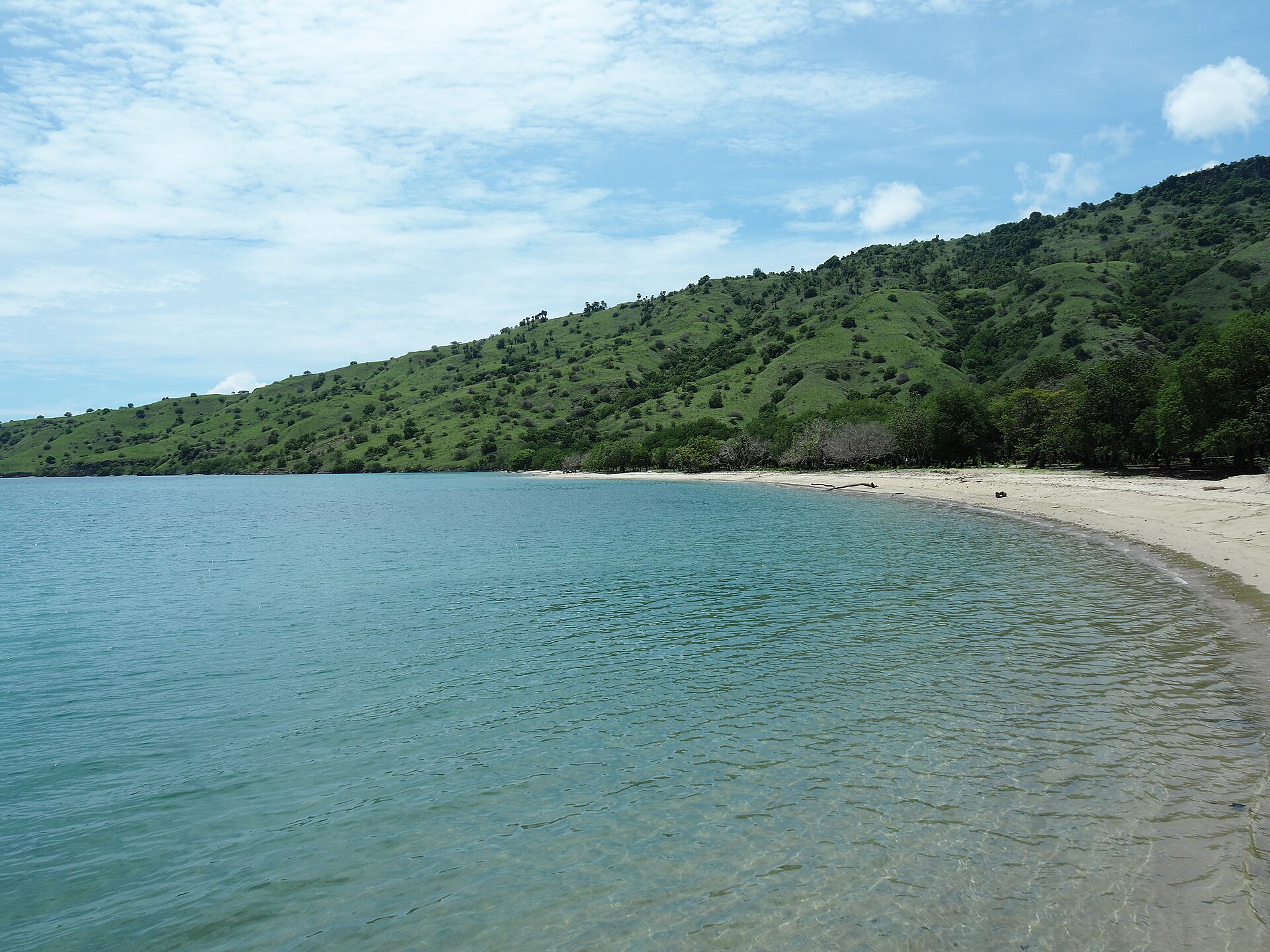
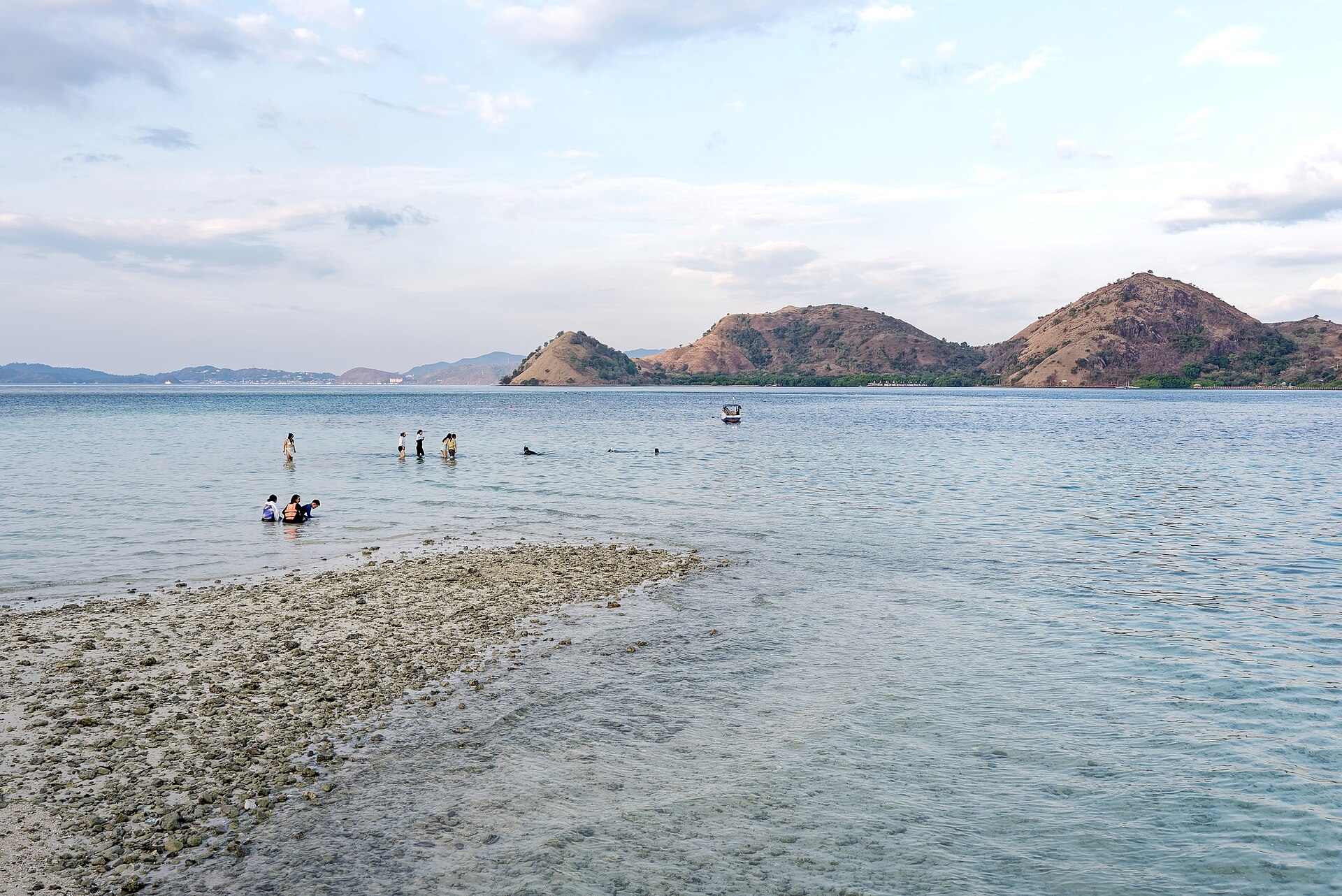
Pantai Merah, the Pink Beach that appears on every itinerary, is on this island’s eastern coast — not on Rinca, despite what several review sites say.
Crowds and Timing
Komodo Island is quieter than Rinca for a structural reason, not a scenic one: the crossing costs a full day, so the shared day-trip fleet mostly does not come. What arrives instead is liveaboards on longer itineraries and private charters, spread across a wider window.
The 2026 access rules change the arithmetic in a way most pages have not caught up with. Entry now runs against a daily ceiling for the whole park and in timed sessions rather than all day, so a boat arrival time is set by the reservation rather than by the crew. Per-site caps for Loh Liang circulate at around 250 people a day, but that figure appears in operator guides rather than in the regulation itself and conflicts with other published numbers, so treat it as an indication of scale rather than a limit you can plan against.
The concentration is at the ranger station, as it is everywhere in the park, and for the same reason: it is where the groups form and where the habituated dragons are. Take the longer trek and the ratio of people to island changes quickly.
The trade is real and worth stating plainly. You spend five hours on a boat to get a trek that is longer and less crowded than Rinca, on an island with a bigger dragon population. Whether that is a good deal depends entirely on how many days you have.
How to Visit
Full-day trip. Roughly 2.5 hours each way by speedboat from Labuan Bajo, up to four by wooden boat. Usually paired with Pink Beach, which is on the same island, and with a manta stop on the way back.
Liveaboard. The sensible way to reach Komodo Island. Vessels already inside the park take the trek in the cool of the morning without the crossing eating the day, which is why it appears on 4D3N and longer routes rather than on 3D2N.
If you are short on time, take Rinca instead and use the saved hours for a viewpoint or a dive. The dragon experience is comparable; the logistics are not.
Route context: Komodo National Park and the 4D3N itinerary.
Boats That Sail Here
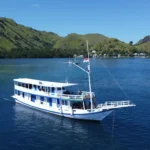
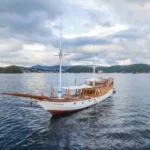
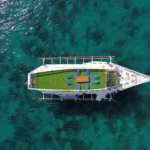
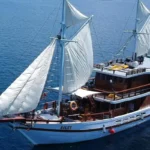
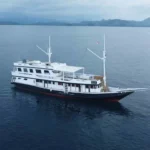
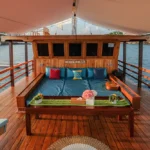
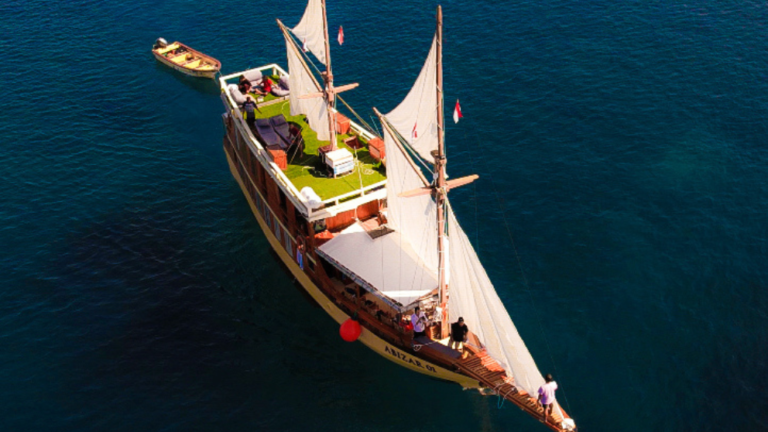
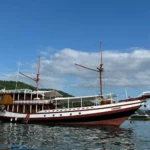
145 boats in our directory call here on their published itineraries, and the 12 with live pages are listed first. The list is generated from those itineraries, so it changes when a route changes rather than when someone remembers to edit this page.

Who This Suits
This suits travellers with days rather than hours: anyone on a four-night liveaboard or longer, and anyone treating dragons as the reason for the trip rather than one stop among five.
The trek itself is not demanding. It is longer than Rinca’s but still walking rather than climbing, and the short options are manageable for families and older visitors. Heat is the limiting factor.
It suits anyone interested in the island as a place rather than an enclosure — the village, the history, the scale — because that is what the extra hours actually buy.
It does not suit a tight schedule. On a three-day trip the five hours at sea are better spent elsewhere, and Rinca delivers the same animal.
What to Bring
- Closed shoes with grip, and more water than for Rinca — the trek is longer and shade is inconsistent.
- A hat and reef-safe sun protection.
- Long sleeves and trousers if you burn or react to insects. Avoid strong perfume.
- No food. Dragons track scent at distance; carried snacks are the most common cause of a trek going wrong.
- Cash, if you intend to buy anything at the village or from the stalls near the station.
Safety Notes
Komodo dragons are large wild predators with a venomous bite. They run faster than a person over short distances and they swim. Ranger escort is mandatory and unaccompanied walking is not permitted.
Stay with the group, stay on marked trails, avoid sudden movement, and keep the distance you are given. The rangers know the individual animals near the station, and that knowledge is the safety system rather than the stick.
Carry no food and nothing strongly scented. Visitors who are menstruating should tell the rangers so the group can be managed — dragons detect blood at distance.
The island is bigger than Rinca and the trek goes further from the jetty, which means help is further away. There is no medical facility on the island; the nearest is in Labuan Bajo, hours away by sea.
Photography Notes
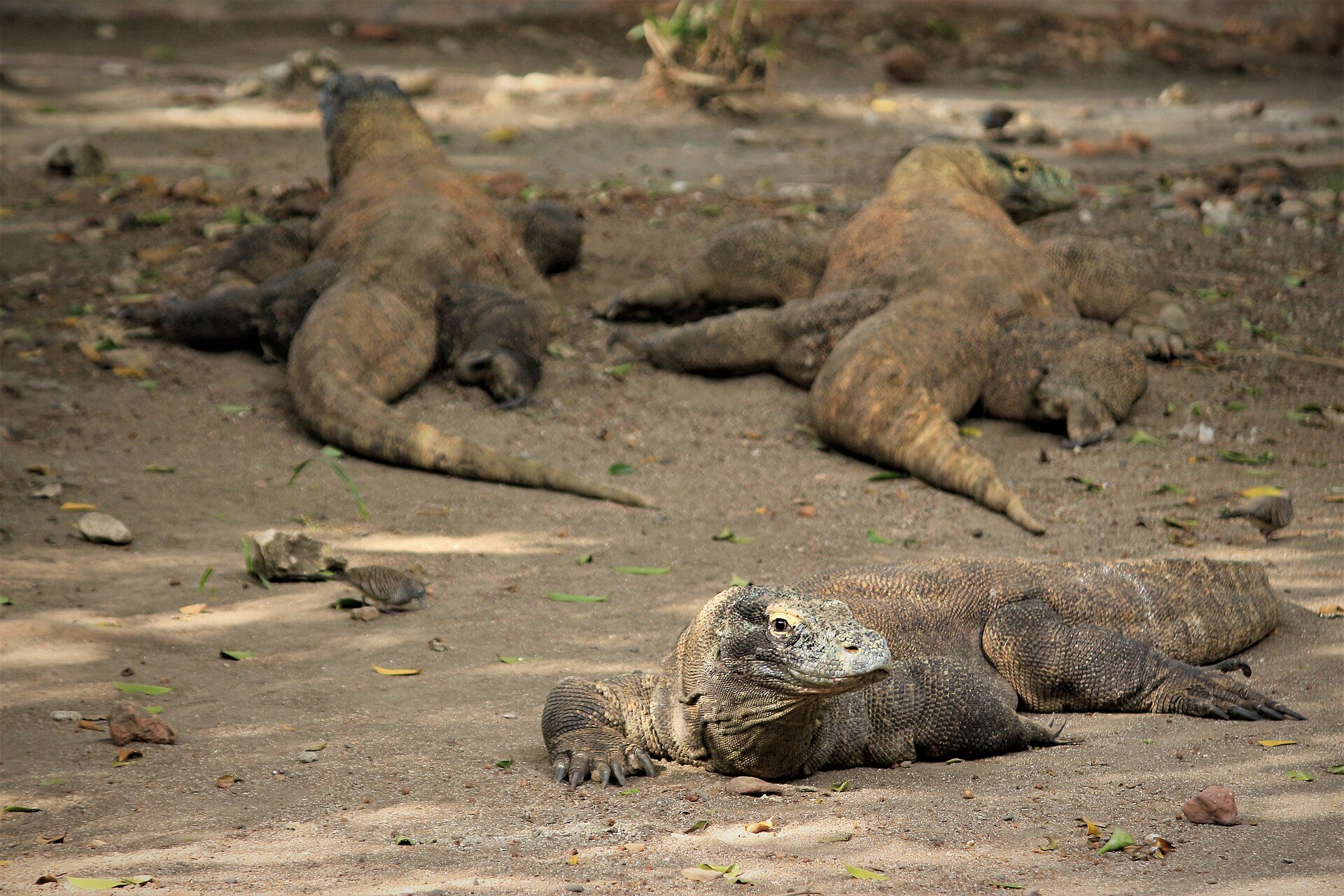
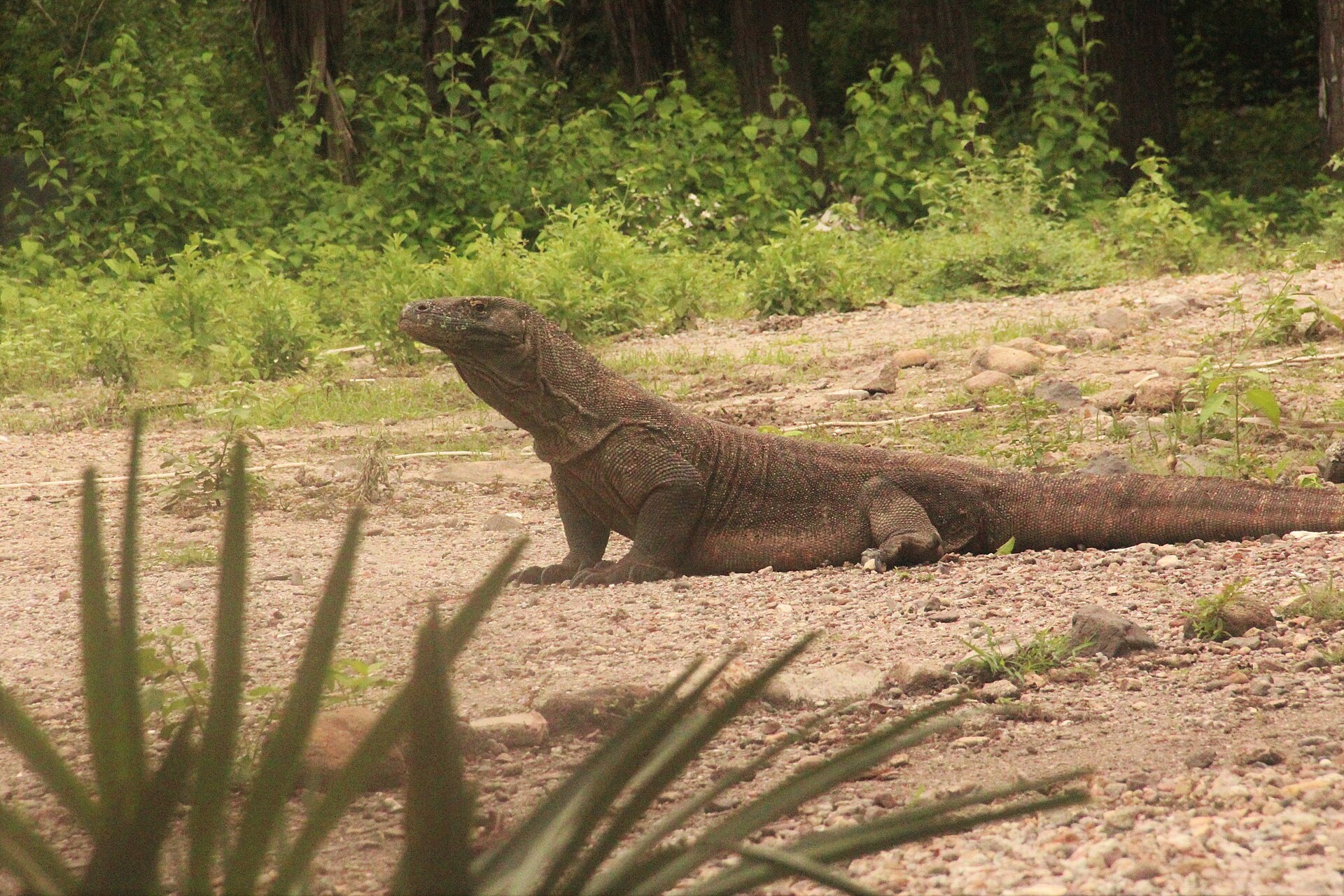
Loh Liang photographs in two registers, and knowing which one you are in saves the disappointment. Around the ranger station the dragons are habituated and close, so the constraint is not reach but background: the kitchen area, the stilted buildings and every other visitor are all in frame, and a wide lens will include the lot. Shoot tight, shoot low, and accept that these are portraits of a managed animal.
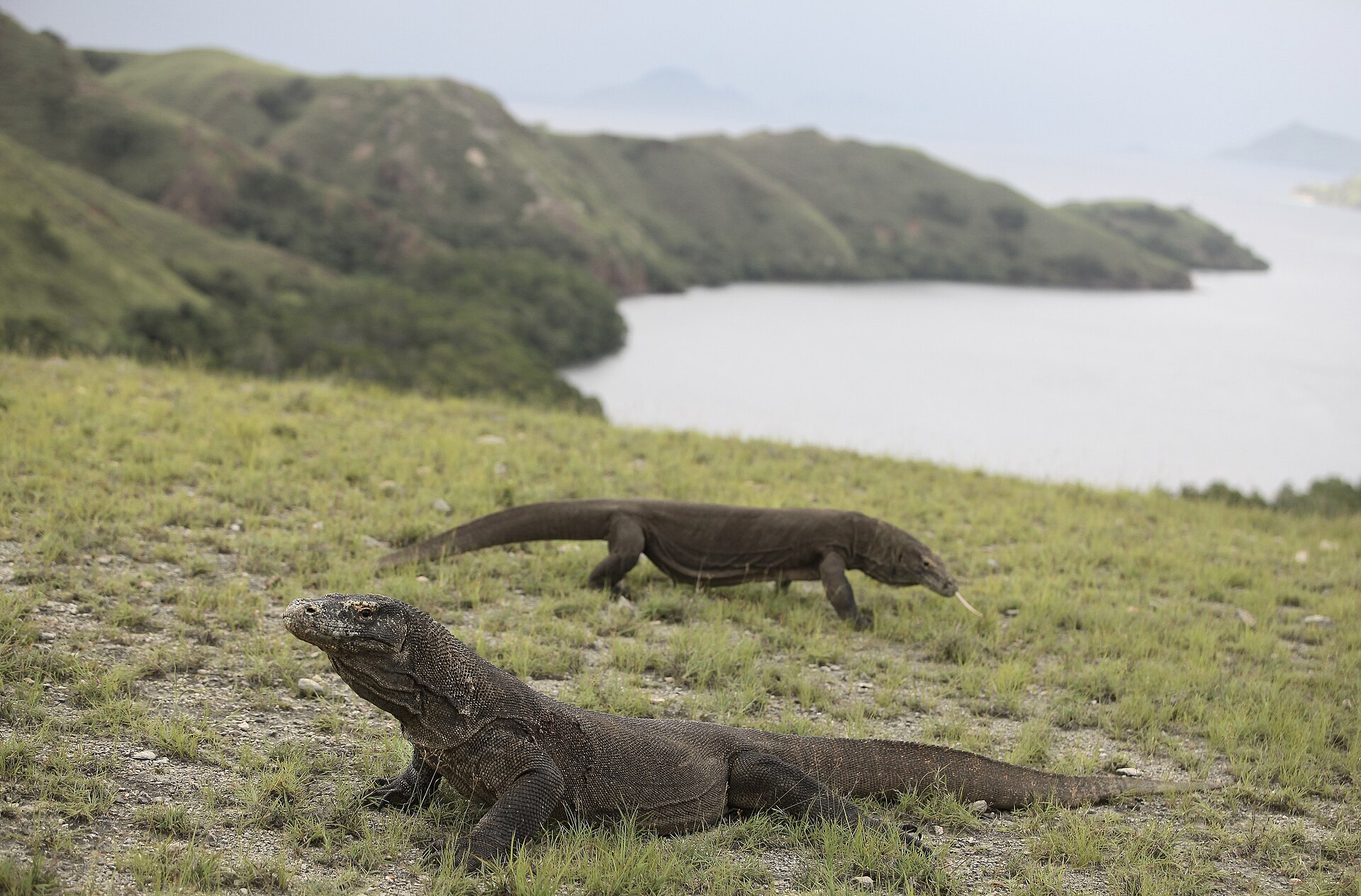
The second register is the long route, where the ground opens into savannah and you can put real distance between yourself and the station. This is where the island looks like an island rather than like a viewing area, and where 200 mm or longer earns its weight.
Light is the limiting factor. The savannah is high-contrast and shadeless by mid-morning, and the trek starts early for heat reasons that happen to coincide with the good light. Pantai Merah on the same coast is the opposite problem — its colour reads strongest under high sun — so the two subjects on this island want opposite hours, and a full day is what lets you have both. Drone permits inside the park are separate, costly and arranged in advance.
Entrance Fee
Komodo Island sits inside Komodo National Park. Statutory entrance is charged per person, per day—not per visit. Access uses SiOra e-ticketing and cashless payment; reserve before travel, preferably by H-1. A 1,000-visitor daily quota has applied since 1 April 2026 to the main visitor islands and 23 dive sites.
Ranger escort is an operational requirement for the trek, but the statutory fee schedule does not establish one universal extra ranger charge for every visitor. Ask the operator to identify any site or guiding-service line separately. The verified statutory table, legal basis and source date appear in What the Park Costs below.
Frequently Asked Questions
Is Komodo Island worth the extra travel time over Rinca?
Only if you have the days. Komodo Island is roughly 2.5 hours each way by speedboat against about an hour to Rinca, which turns a half-day into a full one. What you get is a larger island, a longer and less crowded trek, and the biggest dragon population in the park. On a three-day trip that is a poor trade; on a longer liveaboard where the boat is already inside the park, it costs almost nothing.
How many Komodo dragons live on Komodo Island?
Around 1,700 is the number in circulation, and unlike most figures on this subject it does have a source: Purwandana and colleagues, Biological Conservation, 2014, a mark-recapture study that put the park total at roughly 3,000 to 3,400 individuals with Komodo Island ahead of Rinca.
What almost no page adds is what that number counts. It counts every age class, hatchlings included. The IUCN assessment that moved the species to Endangered in 2021 put mature adults across the entire species at fewer than 1,400, with no single subpopulation holding more than 500 adults. Park-wide counts reported through the UNESCO monitoring process show 3,396 individuals in 2023 against 2,897 in 2018, so Komodo and Rinca are stable to slightly rising even while the Flores populations contract.
Treat any page quoting a bare 1,700 without saying which animals it counts as repeating rather than reporting.
Do people live on Komodo Island?
Yes. Komodo village sits on the east coast, with a population recorded at about 1,764 in 2017. The history is unusual and almost never mentioned on tour pages: the native Komodo people have been extinct since the 1980s, and the present community is largely Bugis from South Sulawesi and Bima from West Nusa Tenggara. People and dragons share the island, which is not a detail most visitors expect.
Is Pink Beach on Komodo Island?
Yes. Pantai Merah sits on Komodo Island’s eastern coast, and most itineraries pair it with the Loh Liang trek because they are on the same island. Several review sites place it on Rinca, which is wrong. Padar has a separate, lighter pink stretch, which adds to the confusion.
How long is the trek at Loh Liang?
Roughly one to two hours depending on the route you take, longer than the equivalent on Rinca. The ground is more varied — dry monsoon forest opening into savannah rather than savannah throughout. It is walking rather than climbing, and heat rather than gradient is what makes it hard.
Can I go without a ranger?
No. Ranger escort is required on the sanctioned treks at Komodo and Rinca. Reserve park access through SiOra before travel; Ministry guidance recommends H-1.
The statutory schedule charges entrance per person, per day and separately lists applicable activity, vessel and special-use charges. It does not establish one universal extra ranger charge for every visitor. Ask the operator to identify any site or guiding-service line on the itemised total. The verified figures and source date appear in What the Park Costs on this page.
Which is better for photography, Komodo or Rinca?
Komodo, if you take the longer route and have the patience. The habituated dragons near either ranger station photograph the same way — managed and close. The difference is the distance you can put between yourself and the station, and Komodo Island simply has more of it. Early morning on the longer trail is where the frames that do not look like a viewing area come from.
When is the best time to visit Komodo Island?
Early morning, and outside the December-to-February wet season if you can choose. Dragons are more active before the heat builds, and the savannah has little shade once the sun is up. The dry season also gives calmer crossings, which matters more here than at Rinca because the passage is two and a half hours rather than one.
What the Park Costs
| What you pay | Amount | Basis |
|---|---|---|
| Park entrance, foreign visitor | Rp 250,000 ≈ $14 | per person, per day The statutory Class I entrance rate. The 150% holiday rule applies to Indonesian visitor and student rates, not this foreign visitor rate. |
| Park entrance, Indonesian visitor, normal day | Rp 50,000 ≈ $3 | per person, per day The normal-day Class I entrance rate. |
| Park entrance, Indonesian visitor, holiday or collective leave | Rp 75,000 ≈ $4 | per person, per day 150% of the normal Indonesian visitor rate on the dates covered by the statutory holiday rule. |
| Indonesian student group, normal day | Rp 25,000 ≈ $1 | per person, per day For Indonesian student groups of at least five people. |
| Indonesian student group, holiday or collective leave | Rp 37,500 ≈ $2 | per person, per day 150% of the normal student-group rate; the minimum group size remains five. |
| Scuba diving activity | Rp 25,000 ≈ $1 | per diver, per day A separate activity charge in addition to the applicable entrance fee. |
| Motorised vessel entry | Rp 100,000–200,000 per boat, per day | Rp 100,000 for 40–100 HP, Rp 150,000 for 101–500 HP, and Rp 200,000 above 500 HP. |
| Drone use | Rp 2,000,000 ≈ $112 | per unit, per day A separate special-use charge. Complete the required SiOra/SIMAKSI process before travel. |
- SiOra is the park’s e-ticketing and SIMAKSI system. Reserve before travel; Ministry guidance recommends completing the reservation by H-1. An operator can assist, and self-service is available at the Komodo Visitor Center and KP3 terminal.
- Payment is cashless through the methods available in SiOra, including BRIVA or bank transfer and supported e-wallets. Keep the e-ticket and ensure the traveller details are correct.
- A 1,000-visitor daily quota has applied since 1 April 2026 to the main visitor islands and 23 dive sites. Availability therefore depends on the travel date and registered itinerary.
- The final SiOra total can include entrance, activity, vessel and special-use charges. Ask the handling operator for an itemised total before issuance.
- Official public guidance does not state one universal refund or rescheduling rule for every reservation. Confirm the current SiOra terms in writing before the ticket is issued, including treatment of weather disruption.
Statutory fees under Peraturan Pemerintah No. 36 Tahun 2024, in force since 30 October 2024. Verified 31 August 2026 against the official PP 36/2024 schedule, the Ministry of Forestry SiOra notice and the Ministry’s 2026 quota notice. Amounts are payable in rupiah; dollar figures are courtesy estimates converted at Rp 17,900 and rounded.
Activities
Cruise Areas
Location
Komodo Island, Komodo National Park, East Nusa Tenggara, Indonesia







Add a review